
I guide you on a journey to reconnect with your body, your natural strength, and your full potential.
Build a stronger, more agile, and resilient body. Develop the confidence and mental toughness to match.

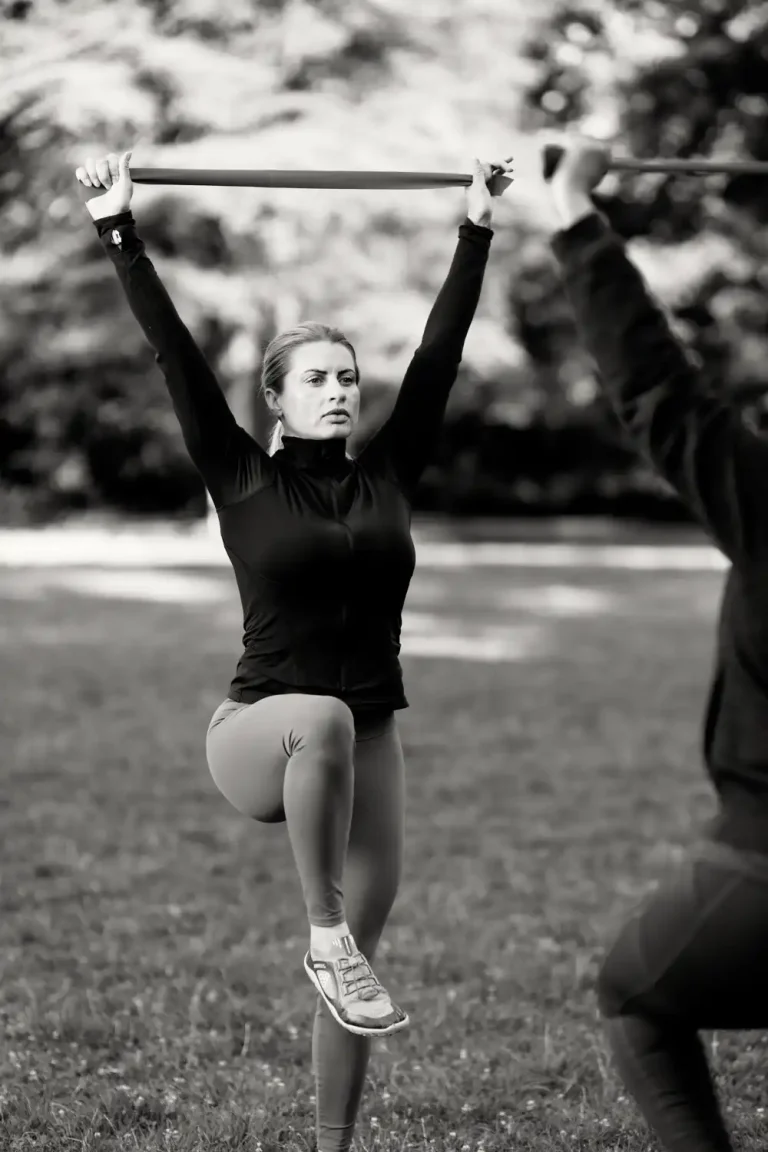
Functional training, whether in a group or one-on-one sessions, is a performance-driven approach that enhances overall physical conditioning by focusing on natural human movement patterns: lifting, pushing, pulling, walking, running, and more.
Through Functional Training, you will:
1
Jumping jacks, Bodyweight squats, Trunk rotations, Arm circles.
2
4 rounds – 40s work / 20s rest
• Squat → Lunge + Rotation
• TRX Row or Dumbbell Row
• Plank
• Kettlebell Swings
• Farmer’s Walk (or static lunges)
3
Cool down with stretches for the hips, back, and shoulders, combined with deep breathing.

Certified in Ashtanga and Vinyasa Yoga, I offer comprehensive guidance to help you build and maintain both your physical and mental wellbeing.
Each practice is designed to help you challenge yourself at your own pace, while staying fully connected to your breath.
We work on flexibility, mobility, coordination, concentration, and body awareness, while also stimulating cognitive abilities.
Breathe deeply. Move freely. Smile often — even in downward dog, you’re already winning.
Marinela


Each session lasts between 60 and 90 minutes and begins with a structured physical and mental centering phase. This includes guided breathing techniques (pranayama), carefully adapted to your level and your condition on the day, ensuring a safe, progressive, and personalized practice.

Whether you are a beginner or an experienced practitioner, you are welcome.
My teaching approach is professional, structured, and progressive, with a strong emphasis on proper alignment, body awareness, and mindful breathing. Each practice is adapted to individual abilities to ensure safety, consistency, and steady development.

Pilates is built on one essential principle: breathing.
Each session begins with lateral thoracic breathing, designed to activate the body’s center — the well-known Powerhouse. This deep activation creates a strong foundation for every movement.
We then move into a gentle joint and muscle warm-up, carefully preparing the body for exercise while improving mobility and awareness.
Key Pilates Exercises:
In 10 sessions, you’ll feel the difference. In 20, you’ll see the difference.
And in 30, you’ll have a whole new body.Joseph H. Pilates

Sessions take place outdoors whenever weather conditions allow, so you can benefit from the natural energy of the environment and create a genuine connection with nature.
In case of unfavorable weather, sessions are held in carefully selected, calming studio spaces designed to ensure comfort and focus.

Each session lasts between 45 minutes and 1 hour, with 10 to 15 repetitions per exercise, depending on the focus and goals of the day.

Whether you are a beginner or experienced, you are welcome.
My approach is supportive, structured, and progressive, with special attention given to body awareness and breathing.

I offer support during your pregnancy to prepare your body and mind for the arrival of your baby.
Ideal for maintaining your energy without excessive fatigue, with moderate and safe exercise.
You will use elastic bands and light weights for gradual and adaptable strengthening.
We incorporate yoga and Pilates so that your breathing promotes good posture, relaxation and preparation for childbirth.
The programme is tailored to each woman with sessions lasting 45 minutes to 1 hour.

Every woman experiences the postpartum period differently, and it is essential to listen to your body and respect your own pace.
As a personal trainer, I am here to support you through this beautiful stage of your life, with care and expertise.
As soon as your body is ready — after medical clearance and respecting the recovery period — I offer gentle, targeted postnatal Pilates sessions.
How often you should see a fitness coach depends on your goals, your fitness level, and your schedule.
It is generally recommended to have between two and three sessions per week with a coach. This allows for a good balance between intensity and recovery, while allowing the coach to tailor the sessions to your specific needs.
Outside of sessions with a coach, it is important to supplement your training with light activities (such as walking, yoga, or stretching) to promote recovery and maintain an active lifestyle. It is also crucial to follow your coach’s advice on rest and nutrition.
Yoga and Pilates are a complementary duo, ideal for developing both physical strength and mental well-being.
Both are excellent for toning muscles, but each in a slightly different way.
Yoga and Pilates are more than enough to maintain functional muscle tone, improve posture, and develop overall strength.
If your goals are more focused on significant muscle gain or very specific and rapid strengthening, adding dumbbells or a complementary weight training routine may be beneficial.
For truly visible results, you can generally expect to see changes within 6 to 12 weeks, depending on your starting point and your commitment.
Frequency of activity is one of the factors that influence physical changes.
Physical changes depend on several factors, including frequency, intensity, duration and type of physical activity, as well as progression, recovery, nutrition and sleep quality.
Overtraining occurs when your body does not have enough time to recover between training sessions that are too intense or too frequent.
Planning adequate rest days, varying the intensity of your sessions, not training intensely every day, and scheduling rest days during the week allows your body to recover and avoid injury. It is important to listen to your body.
Sports periodisation is the systematic planning of a short- and long-term training programme with variable loads, rest periods, and adequate recovery time.
Motivation isn’t something you have, it’s something you do.
To find motivation, you need to start by identifying a personal reason: improving your health, feeling better about your body, reducing stress, or simply regaining energy.
Exercising doesn’t always mean sweating it out on your own — it can also mean chasing after your children, dancing with friends, or laughing while playing. Sport can be a bonding experience.
It’s essential to choose an activity that you really enjoy, not just one that you think you should do.
Set the right goals. Setting simple, achievable goals, even very small ones, creates a sense of progress. Doing something regularly, even a little, creates momentum: the more you move, the more you want to continue.
Being surrounded by people who exercise can really help boost your motivation.
You can build muscle effectively at home using bodyweight exercises such as push-ups, squats, lunges, core training, or pull-ups.
You can also increase the difficulty by wearing a weighted backpack or using elastic bands. The key is to be consistent, progress gradually and eat a balanced diet rich in protein.
No need for expensive equipment.
Motivation and consistency are the keys!
Consistency: whether you choose to train in the morning or evening, consistency is the key to success, especially at the beginning.
Choose a schedule that suits you and stick to it, and make your training a priority.
After a vaginal delivery:
More strenuous exercise (running, fitness training, etc.): after 6 weeks, following perineal rehabilitation.
Caesarean section:
Resuming exercise: after 8 to 10 weeks, allowing time for the muscles and scar to heal.
Medical approval is essential before resuming exercise.
Resuming exercise after childbirth depends on several factors, including the type of delivery (vaginal or caesarean), personal recovery, and the recommendations of your healthcare professional. Consult your doctor or midwife before resuming physical activity.
A fitness coach improves the effectiveness of training sessions through a tailor-made programme, continuous motivation and optimal execution of exercises.
Training with a coach leads to faster results thanks to a personalised programme, correct execution of movements, constant motivation and tailored progression.
The best way to find a professional fitness coach is often through word of mouth.
Before you start your search, clearly determine what you want to achieve: weight loss, muscle gain, preparation for a sporting event, improvement of your overall physical condition, etc.
Each coach may have a speciality, and some may be more suited to your needs than others.